
 Get a Quote
 08045812008
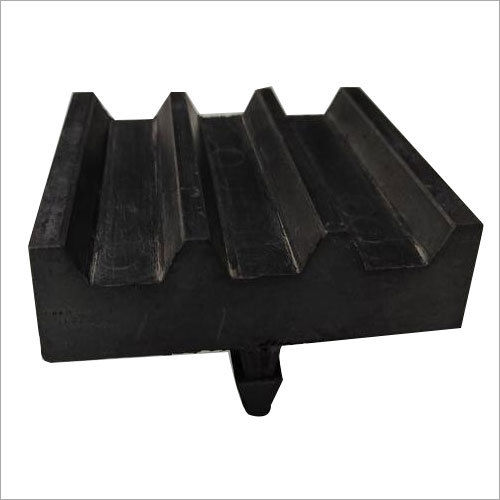
Rubber Profile Pad
60 INR/Piece
Product Details:
- Hardness 50-70 Shore A
- Tensile Strength 8-12 MPa
- Size Customizable
- Compression Ratio 15% - 25%
- Feature High durability-Low replacement costs
- Color Black
- Density 1.2 Gram per cubic centimeter(g/cm3)
- Click to View more
X
Rubber Profile Pad Price And Quantity
- 60 INR/Piece
- 1000 , , Piece
- Available for size, shape, and color
- 5
- Standard export carton or as requested
- 50-75 Shore A
- 35% (22 hours at 70C)
- Indoor and outdoor
- Resistant to ozone, UV and aging
- Direct lay or adhesive mount
- Rectangular profile
- 300%
- 7-15 working days
- 100 pieces
Rubber Profile Pad Product Specifications
- 0.3%
- <1%
- Yes
- Self-extinguishing
- 0.85 kg per piece
- Rubber Profile Pad
- Smooth
- Used for vibration isolation, sealing, insulation, and cushioning in industrial, automotive, and construction applications.
- EPDM/Natural Rubber
- 50-70 Shore A
- 8-12 MPa
- Customizable
- 15% - 25%
- High durability-Low replacement costs
- Black
- 1.2 Gram per cubic centimeter(g/cm3)
- Single piece molded
- Plain/Flat
- 1000 mm
- Excellent to water, mild acids, and alkalis
- Low
- Less than 5%
- 10 mm
- Pad
- 50 mm
- EPDM, Natural Rubber
- 0.5 mm
- -40C to +100C
- 1.5%
- Available for size, shape, and color
- 5
- Standard export carton or as requested
- 50-75 Shore A
- 35% (22 hours at 70C)
- Indoor and outdoor
- Resistant to ozone, UV and aging
- Direct lay or adhesive mount
- Rectangular profile
- 300%
- 7-15 working days
- 100 pieces
Rubber Profile Pad Trade Information
- 2000 , , Piece Per Day
- 15 Days
Product Description
We provide a Rubber Profile Pad that may be used in a variety of applications. Please get in touch with us for more information. Rubber profiles are used in the automobile industry as weather stripping to seal doors, windows, and trunks, among other things. Rubber extrusions and profiles are used in various applications such as sealing, noise reduction, vibration reduction, and aesthetic trim, in addition to preventing rainwater and dust from entering the vehicle cabin and causing damage. The Rubber Profile Pad provided is extremely efficient and has been designed to be simple to install and operate.
Specification:
- Material: EPDM Rubber
- Color: Black
Exceptional Chemical Resistance
Our Rubber Profile Pads are formulated to withstand harsh environments, offering excellent resistance to ozone, UV, water, mild acids, alkalis, and aging. This chemical resilience ensures reliable service life across a wide range of applications, both indoors and outdoors, making them a dependable choice for demanding industrial uses.
Versatile Application and Installation
With a rectangular profile and customizable sizes, these pads are designed for direct lay or adhesive mounting, suitable for rapid installation. They excel at vibration isolation, cushioning, sealing, and insulation in automotive, construction, and various industrial settings. Their high durability means they require less frequent replacements, enhancing operational efficiency.
Quality and Customization Options
Manufactured from single-piece molded EPDM or natural rubber, our pads offer consistency in hardness, thickness, and performance. Clients can request customized sizes, shapes, and colors to fit their specific requirements. All pads are packed in standard export cartons, with flexible packaging options upon request and reliable delivery within 7-15 working days.
FAQ's of Rubber Profile Pad:
Q: How are Rubber Profile Pads installed and what surfaces are suitable for installation?
A: Rubber Profile Pads can be installed either by direct lay onto flat surfaces or by using adhesive mount methods for secure attachment. They adhere well to common substrates like metal, concrete, and plastics, making them suitable for diverse industrial and construction environments.Q: What benefits do these pads provide in industrial and automotive applications?
A: These pads deliver excellent vibration isolation, cushioning, and sealing, helping to extend the lifespan of equipment. Their chemical, water, and weather resistance minimizes maintenance, lowers replacement costs, and ensures reliable performance in both harsh indoor and outdoor conditions.Q: What is the process for customizing the shape, size, or color of the rubber pad?
A: Customization is available for size, shape, and color. Simply specify your requirements when ordering. Our team coordinates the design and manufacturing process, delivering tailored pads to fit your application with a lead time of 7-15 working days.Q: When can I expect delivery after placing an order, and what is the minimum quantity required?
A: The standard lead time is between 7 to 15 working days after order confirmation. The minimum order quantity is 100 pieces, making it suitable for both small and large-scale projects.Q: Where are these Rubber Profile Pads mainly used?
A: These pads find critical use in industrial machines, automotive assemblies, and construction sites, providing reliable vibration damping, insulation, sealing, and general cushioning where robust performance is vital.Q: What are the main features that contribute to the durability of these pads?
A: Key features include excellent chemical, UV, and ozone resistance, a robust Shore A hardness (50-75), optimal compression set, and a strong elongation at break (300%). These characteristics ensure prolonged life and reduced need for replacements.Q: How does the pad's material enhance its performance in harsh environments?
A: Made from EPDM and high-quality natural rubber, the pad resists aging, moisture, thermal extremes, and flame, offering dependable use from -40C to +100C, with low water absorption and environmental resilience resulting in superior performance.Tell us about your requirement

Price:
Quantity
Select Unit
- 50
- 100
- 200
- 250
- 500
- 1000+
Additional detail
Mobile number
Email

Other Products in 'Rubber Profile' category



Contact Details
SAGA ELASTOMER PVT. LTD.
GST : 27AAMCS1406M1Z3
GST : 27AAMCS1406M1Z3

- Plot No. 6, Dewan & Sons Industrial Complex, Aliyali Village, Palghar West,Palghar - 401404, Maharashtra, India
- Phone :08045812008

- Mr Parind Sarmalkar (Head Marketing & Sales)
- Mobile :08045812008
- Send Inquiry
 Send Inquiry



|

SAGA ELASTOMER PVT. LTD.
All Rights Reserved.(Terms of Use)
Developed and Managed by Infocom Network Private Limited.
Developed and Managed by Infocom Network Private Limited.

